He Fuchu
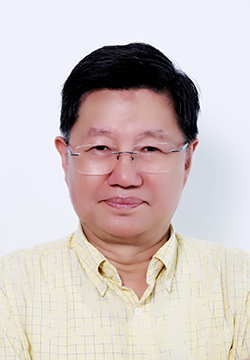
Professor He Fuchu
Doctor of Science, honoris causa (2025)
A visionary scientist and a pioneering researcher, Professor He Fuchu has pushed the boundaries of the fields of proteomics, precision medicine and systems biology. His distinguished career, spanning over three decades and built upon a foundation of intellectual ingenuity, a trailblazing spirit and profound dedication, has been instrumental in placing China at the forefront of scientific advancements of the modern era.
Professor He’s academic foundation was laid at Fudan University, where he earned his Bachelor of Science in 1982. He subsequently pursued further knowledge at the Academy of Military Medical Sciences, where he completed a Master of Science in 1985 and a Doctor of Philosophy in 1994. This rigorous training in the life sciences provided the solid foundation for his ascent as a scientist of global stature.
At a time when proteomics was still an emerging field in China, Professor He was among the first to dedicate himself to exploring the intricate processes, functions, and structures of proteins. His many landmark achievements include the mapping of the human proteome and the discovery of hepatopoietin (HPO). His systematic decoding of the human proteome, particularly in the liver, led to the discovery of hundreds new genes and proteins. Furthermore, his research has had direct clinical relevance, identifying susceptibility genes associated with common malignancies in the Chinese population, such as liver cancer, as well as other communicable and non-communicable diseases. His scientific contributions have been documented in a broad range papers in leading international journals, which solidified his academic standing and led to appointments on the editorial boards of various prestigious publications.
Professor He’s research philosophy has always been driven by societal and national needs. As early as the 1990s, he recognised the strategic importance of genomics and proteomics for the well-being of the Chinese people. Aware of China's high rates of hepatitis and liver cancer at that time, he decided to focus his research on the liver, aiming to address the critical need for risk prediction and early diagnosis. Together with his team of professional researchers in his laboratory, he conducted in-depth, systematic studies on novel genes using bioinformatics and large-scale DNA sequencing. This groundbreaking work led to the establishment of new paradigm of “proteomics-driven precision medicine”, fundamentally shifting how diseases could be understood and treated at a molecular level. Additionally, he played a key role in founding flagship research institutions such as the Beijing Proteome Research Centre and the Institutes of Biomedical Sciences at his alma mater, Fudan University. With his passion for research, loyalty to the Chinese nation, and a deep sense of responsibility toward the Chinese people, he sees it as his lifetime mission to contribute to the betterment of China in science and health.
Professor He’s vision also extends beyond national borders, as he has become a pivotal figure in the global proteomics community. In 2001, the same year he was elected as an Academician of the Chinese Academy of Sciences—one of China’s highest academic honours—he became a founding member of the Human Proteome Organisation (HUPO) and subsequently established the Chinese arm of HUPO in 2003. One of his most significant international leadership roles came when he became the first Chinese scientist to lead the Human Liver Proteome Project (HLPP), an international consortium aiming to create a comprehensive map of the human liver proteome. This project led to the identification of a large number of potential drug targets for major liver diseases. His latest project, the Proteomic Navigator of the Human Body (the π-HuB) was launched in 2024 and continues this tradition of ambitious inquiry. His efforts not only have advanced the fundamental understanding of proteomics but also fostered productive international collaboration. The theoretical frameworks and technical standards developed under his leadership have been widely acclaimed and applied by the international scientific community. These monumental achievements also serve as a resounding statement declaring China’s arrival as a major global contributor in cutting-edge life sciences, boosting China’s status and reputation in the global scientific landscape.
The long list of prestigious honours that Professor He has received over the years is a testament to the breadth and depth of his global impact. These include the China Youth May Fourth Medal (2002), the Science and Technology Progress Award of the Ho Leung Ho Lee Foundation (2003), the C.C. Tan Life Science Achievement Award (2009), HUPO's Distinguished Service Award (2011) and Distinguished Achievement in Proteomic Sciences Award (2020), and the Shulan Medical Award (2017), among others. These accolades firmly place him among the pantheon of the field’s greatest contributors.
Professor He’s scientific legacy has also influenced many people in the long term. For more than two decades, Professor He has been the guiding hand that nurtures the proteomics community. He initiated numerous research programmes, organised prominent international and national conferences, and conducted training initiatives to cultivate new generations of Chinese scientists. Concurrently, he tirelessly advocates for proteomics within China, spreading awareness through articles, lectures, academic reports and other means to support the field's ongoing rise and development. He finds immense fulfilment not only in leading teams of outstanding young people but also in passing the torch—cultivating the next generation who can eventually surpass him. His advice to the youth is to look beyond self-interest and choose life goals that serve the greater good of society and the nation. For him, being a scientist is not merely a profession but a lifelong calling. It is his belief that success has no shortcuts; the only path is to move forward, overcoming each challenge along the way.
Hong Kong Baptist University is built upon a tradition of excellence in teaching and research, with a strong commitment to innovation and international collaboration. The University cultivates talent that can contribute meaningfully to positive transformations for the world and humankind. Professor He, being a world-renowned scholar and a research pioneer, mirrors the University’s aspirations for innovation to advance knowledge and the public good. His role as a builder of international consortia and a bridge between Chinese and global scientific communities also exemplifies the collaborative spirit we hold in high regard. By conferring this Doctor of Science, honoris causa upon Professor He, the University acknowledges and honours his extraordinary achievements, his quest for transformative research and ideals of academic excellence, and his vision for innovation for humanity.