Michael Houghton
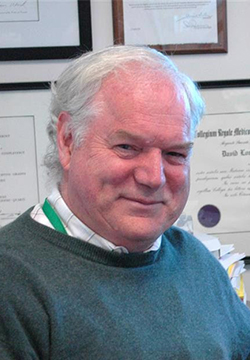
Professor Sir Michael Houghton
Doctor of Science, honoris causa (2025)
British scientist and Nobel Laureate Professor Sir Michael Houghton is a world-renowned virologist whose groundbreaking contributions to medical science have had a transformative impact on global health. His discovery of the hepatitis C virus (HCV) in 1989, along with fellow researchers including current Hong Kong Baptist University (HKBU) colleague Dr Choo Qui-Lim (朱桂林), Dr George Kuo Ching-Hung (郭勁宏) and Dr Daniel W Bradley, used a complementary DNA library containing non-A and non-B hepatitis viruses to identify a DNA clone derived from the HCV RNA genome. Their discovery of HCV not only revolutionized contemporary understandings of viral infections but also paved the way for appreciable advancements in blood transfusion medicine, including life-saving diagnostics for blood screening during the early 1990s. These latter led directly to the rapid prevention of millions of infections and deaths worldwide. The use of diagnostic reagents in blood supplies Sir Michael pioneered for HCV has virtually eradicated the risk of acquiring HCV through blood transfusion. By 1992, the virus had been virtually eliminated from the North American blood supply; this, in turn, led to a reduction in annual reported transmission by more than 80 per cent in 1996. Today, the transmission rate of HCV from blood donors has been reduced to a statistically insignificant incidence rate of less than one in two million.
Sir Michael’s onward vision for the prevention of HCV infection, including mitigating the effects of HCV once infected, has also transformed how scientists and medical professionals handle HCV as the co-morbidity of other illnesses—in particular liver and pancreatic cancers, end-stage liver disease, and cirrhosis. Such sustained impacts on medical science and surrounding society demonstrate not only Sir Michael’s key role as foundational to scientific discovery; they also underscore how his collegiality and contributions have provided sturdy scaffolding for subsequent generations of colleagues and students. Of his HCV breakthrough in particular, Sir Michael writes:
the discovery of the Hepatitis C Virus (HCV) was made working with excellent scientist colleagues and applying state-of-art molecular medicine technology to a problem that had remained unsolved for 15 years. The ever-persistent work from an interdisciplinary team over the course of 7 years resulted in the discovery of HCV which has had a major impact on patients, their clinicians, and their students.
Befitting his life-long commitment to the field of global virology, Sir Michael has been the beneficiary of numerous accolades further distinguishing his achievements. A selection of only the most prominent of these includes a British knighthood conferred by Queen Elizabeth II in the Birthday Honours of 2021 for services to medicine; the Nobel Prize in Physiology or Medicine (shared with Dr Harvey J Alter and Professor Charles M Rice) awarded by the Swedish Academy in 2020; the Distinguished Scientific Achievement Award awarded by the American Liver Foundation in 2018; the Gold Medal Award by the Canadian Association for the Study of the Liver in 2011; the Dale A. Smith Memorial Award (shared with Dr Choo Qui-Lim and Dr George Kuo) by the Association for the Advancement of Blood & Biotherapies, USA, in 2005; the Robert Koch Prize in microbiology and immunology awarded by the Robert Koch Foundation in 1993; and the Karl Landsteiner Memorial Award by the American Association of Blood Banks in 1992. Sir Michael was also the recipient of an honorary doctorate in science from his alma mater, the University of East Anglia, in 2019.
Such distinctions have, in no small part, derived from Sir Michael’s reliable partnerships bridging the medical professions, the academy, and industry. He was the Canada Excellence Research Chair in Virology from 2010 to 2018 and is the Li Ka Shing Professor in Virology at the University of Alberta. Upon the Swedish Academy’s announcement of his Nobel Prize in 2020, the President of the University of Alberta, Bill Flanagan stated, simply yet elegantly, that “Dr Houghton has made this world a better place.”
As regards his service to Hong Kong, Sir Michael recently joined the HKBU community as an integral member of the University’s Preparatory Committee for the New Medical School as well as the Expert Advisory Committee for the New Medical School. In these roles, Sir Michael has brought rigor and focus to the task of aligning HKBU’s academic bona fides and research innovation ethos to the rapidly evolving requirements of industry, government oversight, and the marketplace. These significant practicalities notwithstanding, Sir Michael embraces equally the humanistic impact of his career achievements in the context of HKBU’s commitment to liberal arts and whole-person ethos in China, Asia, and for the world. Of his on-going work at HKBU, Sir Michael writes:
The HCV discovery is one example of how we can all work hard together with available technology to solve major problems of mankind. This applies to all challenges facing mankind including those of human sustainability, caring for our planet's well-being, encouraging success and happiness for individuals and for their families, and working together to promote the global human family. Every single graduate of HKBU can make a positive difference to the human race and to our cherished animal and plant kingdoms throughout their lives.
In recognition of Professor Sir Michael Houghton’s career-long achievements in advancing medical science, his great and demonstrable devotion to the cause of humanity, and commitments to Hong Kong and HKBU, HKBU is pleased to award him the Doctor of Science, honoris causa.